How I Play Piano
Most beginining piano lessons focus on teaching people how to play individual notes and read sheet music.
That’s fine. It’s precise, and with practice you can play pretty much anything. The problem is it’s a lot of work.
Piano Abstractions
Like most things, we can view songs at different levels of abstractions.
Thinking about songs as collecitons of individual notes is a very low level. Sheet music tells us how to play exactly the correct note for exactly the correct length of time. It’s very information dense.
The result is accurate, but the downside is it takes more work. Both to learn individual songs, and also to get good at the process in general.
Luckily, most music today sounds good at a higher abstraction, chords.
So the easiest way to get good at piano (by that I mean play a lot of songs that sound good and be able to learn new songs quickly) is to:
- Learn a bunch of chords
- Start learning and thinking about songs in terms of chords instead of notes.
Note this is definitely not a new idea — it’s how most guitar players learn songs, for example. But it seems to be much less common with piano.
- e.g. how guitar players play songs- but less common with piano
- not as information dense
- know a song is made up of a few chords
- and know how to play the chords
- but more flexible — can play chord in a bunch of different ways
- won’t sound exactly as recorded, but pretty good
Most piano lessons teach sight reading. The goal is to be able to look at music like this:
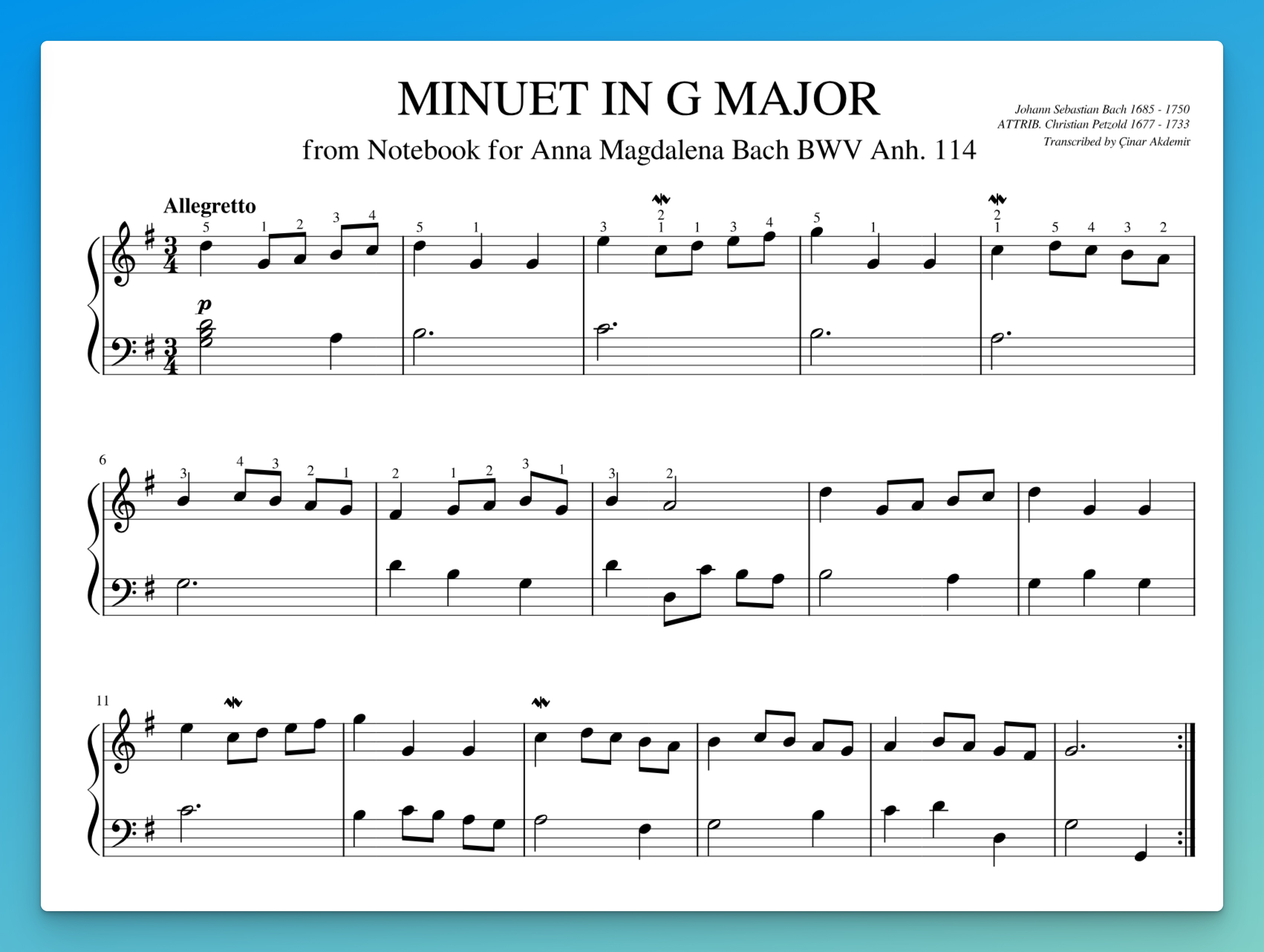
And know which keys to press on the piano (and when, and with which fingers) to play the song.
-
so most people start out learning how to play individual notes
-
play them all correctly — which takes a lot of work, there’s a lot of information there — and the song sounds great
-
get them wrong and it won’t
But it has some drawbacks:
- It takes a decent amount of work — both to learn individual songs, and get good at the process of sight reading in general.
- You can’t play a song unless you have the sheet music.
The fundamental problem is sight reading very low level. You’re focused on individual notes. There are a lot of them (88 on a piano), and if you mess them up the song won’t sound right.
But it’s fundamentally low level. You’re worrying about individual notes. There are a lot of them, and if you mess them up the song won’t sound right.
- It takes a lot of work, both on a song by song basis and to get good at the process in general.
- You can’t play a song unless you have the full sheet music.
But there are some drawbacks:
- It takes a decent amount of work, both to get good at the process in general and on a song by song basis.
- You can’t play songs unless you have the sheet music.
This is certainly doable — you can play any song this way — but in my experience thinking about songs as collections of individual notes is too low level to be optimal.
The main problem is it takes a lot of time and practice to learn new songs. After you’ve been playing a while it gets easier, but again, it takes a lot of time and practice to get to this point.
- With certain exceptions (e.g. non western music or certain classical pieces) most songs sound good at a higher level of abstraction, chords
- been playing piano since I was about 9
- maybe 5 years of formal lessons
Site reading - The lowest level of abstraction
When I first took piano lessons as a kid, it was mostly how to read sheet music. Rougly, I’d say this involved:
- 75% matching up notes with keys
- 25% rythm (quarter notes, 8th notes, rests, counting).
I get the impression most introductory level piano instruction is like this, and I played this way for most of the ~5 years I took formal lessons.
It’s fine — if you get good at it you can play pretty much anything — but it’s kind of hard and takes a lot work to learn a song.
It also makes it important to find the right sheet music. I remember being into books like these:
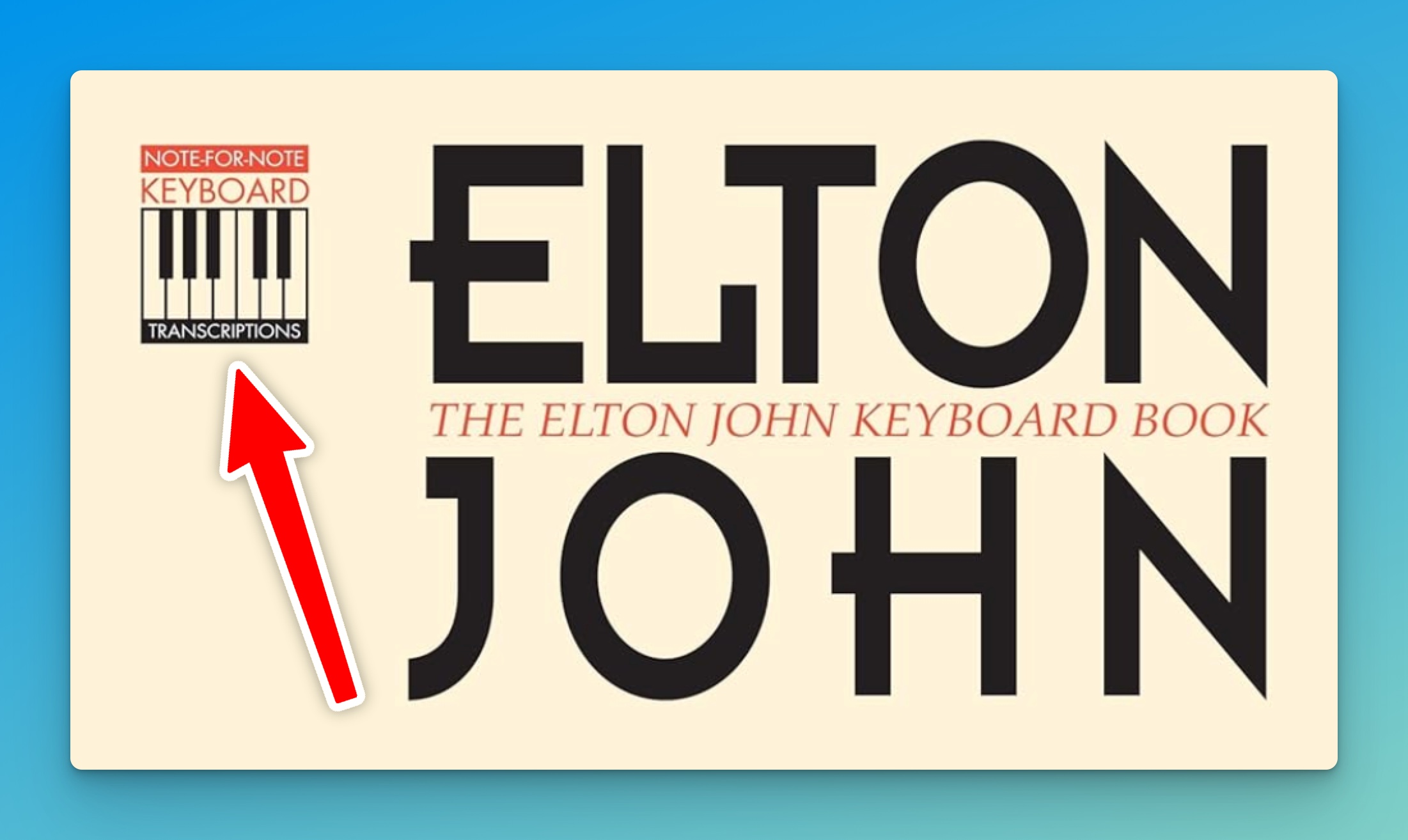
Note the “Note-For-Note” transcription. That was important.
A lot of song books have you play what the singer sings, the song’s melody. That’s no good. I don’t want to play what Elton John is singing, I want to play what he’s playing on the piano, and sing along myself.
Chords - A higher level of abstraction
Eventually — mostly after I stopped taking lessons — I got more interested in chords.